|
HOME - INTRO - REVIEWS - FEATURES - MYSPACE - BLOG - STAFF - CONTACT HORROR 101: THE A-LIST OF HORROR FILMS AND MONSTER MOVIES VOL 1
|
|
CONVENTION REPORTS - INTERVIEWS - S.M.S. - POSTER GALLERY - PSYCHO-BABBLE - LINKS
Kitley's Krypt Presents: "It's not nice to hate."
Jack Hill
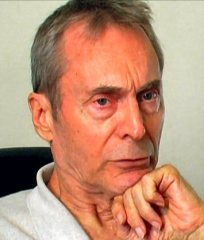
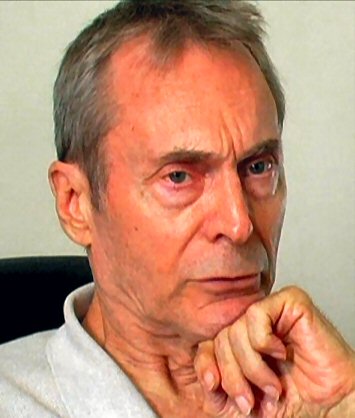
We would like to thank Jack Hill for taking the time to do this interview. Most all of the photos are taken screen shots taken from the SPIDER BABY laserdisc. There is a link at the bottom of the interview to see Jack Hill's filmography. We hope you will enjoy it. Kitleys Krypt: How did the idea or concept of SPIDER BABY come about? Jack Hill: I dont know. It just came to me in a flash of insanity one evening. I just wrote it out. And then when I got the people who wanted to put up the money to make it, then I wrote the screenplay. KK: How long did it take you to write the screenplay? JH: Two or three weeks as I recall. KK: Was the script followed pretty closely during filming or was there any improving done? JH: It was kind of normal, I mean, it was shot in twelve days, so you dont have time to do a lot changes, except on the spot. There might have been some changes. I think the ending was different. We just did something a little simpler then what was in the script.
JH: Oh, he was wonderful. He was a really nice man. It was very interesting because he was an alcoholic and found it kind of hard to get work. He was kind of just hired for his name and who he used to be, and he would just kind of walk through things. But he read the script and just really liked it so much. Particularly after hed met the rest of the cast. It gave him the chance to do a really good role, a comedy, which he had never had been given much chance to do before. And so he wanted very, very badly to do a good job, and he stayed on the wagon. I think he let himself have a half a glass of beer in the afternoon, so he could make it through the day. It was very difficult for him. But he was really good about it. KK: He did come out with a good performance in that. JH: Yea, its his best performance since MICE AND MEN. KK: How did it come about for him to sing the opening theme song? JH: Well the composer, Ronald Stein, who was a very good composer who had done a lot of Cormans movies and AIPs movies, wrote the score for the picture, just got the idea. And asked Lon if hed like to do it. And Lon said hed loved to do it. So we went down to a recording studio and he played the track, and rehearsed it a couple of times, and Lon had a great time doing it.
JH: Well, it was just kind of, like casting so often is, just a matter of good luck. And getting ensemble together people that really click with each other, and really enjoyed working together. Beverly Washburn of course had been an actress in movies ever since she was four years, being in OLD YELLER, and shed been in television and nominated for an Emmy. She was kind of a child star. Jill Banner, who was seventeen, had never done anything. Never been in a movie, never done anything, just was a natural talent. And the two of them, one with 20 years experience and one with none, just got along together and played off each other so wonderfully. Just one of those miracles of good fortune.
JH: Oh, she enjoyed it. I had to encourage her, to constantly tell her she was being great, she was being great, because it was like nothing like anything shed ever done before. She had a great time doing it. KK: What it meant to be that much of a dark comedy, or was it meant to have some seriousness in there? JH: Oh no, it was always intended to be a black comedy.
JH: Gosh, I would hope not. Its a disgusting movie. KK: Well, as far as the family being mentally disable and wacky and stuff, where its funny, but it almost seems like theres a serious tone going through there. JH: I know what youre saying. Whats interesting is that discovered at the convention recently, one of the largest demographics of the fans of this movie are young, teenage girls. They really just love the movie and I think its because of the kind of family bonding in it, you know the kind of father figure who just loves the daughters no matter what they do. It kinds of appeals to them. The movie appeals to all kinds of different classes and age groups for different reasons. And so many people tell me they watch the movie over and over again and see something new in it each time. Thats kind of nice. KK: Yea, its definitely one of those films that you can watch multiple times and still get the same amount of enjoyment out of it. Are you familiar with TEXAS CHAINSAW MASSACRE? JH: Ive never seen it, but yes Ive heard of it.
JH: Its possible. KK: Have you considered doing a sequel? JH: Well, at the time, when we first finished the picture, and actually everyone has high hopes, and I in fact did write a sequel, called VAMPIRE ORGY. A script, which I thought actually was better. But because of the problems with the release of the picture, with the producers being in bankruptcy, and so forth, it was not released for some years after. By that time, the idea of doing a sequel was something not in the cards. But I actually have a script. KK: Was it a continuation?
KK: What was the problem with it being release? A bankruptcy with the producers? JH: Yea, they were in the real estate development business. That was year of the big crash. There was a big boom and then a big bust and they got caught up in the bust. They found themselves with a lot of unfinished apartment buildings that they couldnt handle. So they filed bankruptcy and the movie was locked up in part of the litigation for four years. I think the movie might of saved them from bankruptcy except they got into a panic about it and cut out the whole first part of the movie, the whole Mantan Moreland scene, thinking they were speeding up the movie, getting into faster. And thats a mistake that people who dont know how to make movies sometimes make. The story is in their head and they dont realize that its no longer on the screen, and the audiences are just confused by it. Of course no distributor would take the movie like that. And then so it was too late, and everything was washed up. It wasnt until the bankruptcy was resolved after four years, that Dave Hewitt, the original distributor who had seen it when it was first finished and always liked it; he kept track of it and acquired it. He restored the cut from the first part. And then apparently, which Ive just discovered a couple of weeks ago, had got an editor to do some editing and cut out about 5 or 6 minutes in the second reel. Which Ive just discovered the original print so now were scheduling screenings of the directors cut and going to release it on DVD with the extra 6 minutes in it. KK: Will the extra footage in cut in the film, or just after?
KK: With the scenes in the film? JH: Yea, the entire film, as it was originally edited by me. I had edited the picture myself. So thats the plan at the moment. But were also scheduling some theatrical screenings. I just recently acquired almost all of the original release prints. Which had been, I found, sitting in a storage facility in Santa Monica for the last thirty years. I was able to acquire them and Ive been going through them and restoring the ones that are good enough quality to show. Thats how come I advertise when Ive got enough that I can afford to sell a few of them. I just dont need that many. But amongst those prints, I found this one uncut version.
JH: It did, but it had been slugged out. But a friend of mine actually acquired on of the versions that did have the original title, so Im going to restore the original title to it too. KK: What exactly was the content of the 5-6 minutes that were cut? JH: It was exposition dialog, early in the film, when the lawyer and his secretary are driving in the car, theres a lot of dialog there. And then when they arrive at the house, they meet the children actually outside first. Theres some dialog there before they enter into the house. All that stuff is basically what was cut out. KK: Thats something to definitely to look to forward to, especially the DVD. Is that going to have the same audio commentary thats on the laserdisc? JH: Yes.
JH: Yea, Ive had a lot of very good responses from the commentary from the laserdisc from SPIDER BABY, so itll be the same for the DVD. Plus Im writing some notes on how I discovered the uncut version. KK: Yea, I have the laserdisc and one of my favorite parts on the commentary is how you came about casting Lon Chaney Jr., as far as his agent wanting a certain amount of money. And you said, "Well, lets go for John Carradine." And then his agent said "Well . . .". Which I am glad it worked out that way. I mean I kind of fan of Carradine too, but I dont think it would of came off the same way. JH: No, it wouldnt of been the same.
JH: And hes such a big cuddly bear-type of guy too. Trying to visualize Carradine doing it kind of like visualizing George Raft doing CASABLANCA. Good actor but . . . KK: While doing the research for this interview, I must admit that I hadnt realized that you had worked with Boris Karloff. You did his last four films? JH: I think he did one more film after that. I dont know if was even released. KK: That might have been THE CAULDRON OF BLOOD. JH: It could have been.
JH: Well, I wrote the scripts. One of them I collaborated with another writer on, because I didnt have time to do all four of them from scratch myself. But I directed all of Karloffs scenes and whatever action took place on the same sets. Because we had to build sets here in Hollywood. And the rest was films were finished in Mexico. And I was supposed to go to Mexico to direct the remainder of the movies. But the whole idea of trying to do four movies back to back with scenes shot in Hollywood and then try and put them together in Mexico later was kind of a crazy idea. I wrote the scripts in a way that it could be done. But then the producer found himself in financial difficulties because the people didnt arrive from Mexico when they were suppose to and the actors were the wrong actors, and it scrambled our schedule. We shot in four weeks instead of three, which cost the producer money. And then he subsequently died of a heart attack, which is no wonder. I lost track of it and assumed for years that the pictures were never finished. It was only till many, many years later that I heard that they were finished, and were in fact circulating around on video. To this day, I havent seen any of them.
JH: Just the Karloff scenes. His scenes and other scenes that took place on the same sets, where he was not there, but we had to shoot them because the set was there. KK: I noticed in the four films that they use the same actors in a lot of the films. JH: Thats because they had to shoot four weeks, back to back, so some of the actors appear in more than one of the movies. Also, Id like to mention that the sets of those films were done by my father, who had been art director and set designer since 1925 and he designed the Disneyland Castle, and many other thing. KK: Oh really? You mean the main castle? JH: Yea, the Sleeping Beauty Castle, he designed that. And he designed Tom Sawyers Island, a lot of main street, did all the interiors of Captain Nemos submarine in 20,000 LEAGUES UNDER THE SEA. KK: Wow. Thats pretty incredible. And he did all the sets for the Karloff films? JH: All for the Hollywood sets. KK: What was it like working with Boris Karloff? JH: He was wonderful. He was really a very nice man. He liked the stories. And it was quite a challenge to him and a lot of fun for him to play four different characters, back to back like that. He was at that time, dying from emphysema. He was mostly in a wheelchair with his oxygen. Hed get up and do his scene, and do his action, then go back and sit down and breathe his oxygen. He kind of got through it that way. But he loved working. It took his mind off his problems.
JH: No, no. That was not long after his 80th birthday and LIFE magazine put him on the cover of his 80th birthday and he pointed to that and said that role of Frankenstein is what brought him to the point where he could get his picture on the cover of LIFE magazine. He was quite happy with it, with his career. He felt it gave him the opportunity to do a lot of really great things. KK: Right. Ive noticed that theres not many actors nowadays that are like that. I remember reading somewhere where Karloff had said that he never held anything against the Frankenstein Monster because, like you said, it gave him his career. I think too many actors today are too afraid to be typecast and they try and shy away from that. On the Internet Movie DataBase, they list you as an un-credited director on a few films, like THE TERROR and THE WASP WOMAN.
KK: What about THE WASP WOMAN? JH: THE WASP WOMAN was one of a number of movies that Roger Corman owned which he was selling to TV. And the running time was too short, and they had to have time added to it, and I had to add about 18 minutes, some years after the movie was finished. I had to find a way to add that much time to it, which is one of the wonderful things youd learn working with Roger Corman. And so that maybe what that refers to. I know I dont have credit in the movie, but I wrote and directed about 17 minutes of the movie as it exists today. KK: Thats probably where they got that from. They also have you listed un-credited as a writer for DEMENTIA 13. JH: No, I have a credit on that. Its called "Second Unit Written and Directed By". There again the movie was Francis Coppola, who left to go on to other things, and left the movie unfinished, and too short. So I wrote some additional scenes for it and I shot a lot of the footage that was missing from it, that Francis had not bother to shoot. Thats my contribution to that. Plus I wrote and directed a couple of additional scenes for it. KK: What was it like working for Roger Corman back then?
KK: I know you have SPIDER BABY re-release, and I know you have some other stuff coming out on DVD, such as SWINGING CHEERLEADERS. JH: SWINGING CHEERLEADERS is just now coming out on DVD. I just got the first samples a week ago. Also on videotape. It should be on the market any moment. And the DVD has a commentary, also. KK: Right, you and I think Johnny Legend? JH: Right. And an interview that we did a while back, thats attached to that also. Its also on the tape, the interview. Not the commentary of course, thats only works on the DVD. Other than that, Im working on getting together a project that Ive been trying to get done for 20 years. Its now finally moving ahead, its fully financed. Were just about to the point to where we can start making offers to stars. Itll be a 25 million-dollar picture. Thatll be finally getting into mainstream, here. KK: Any hints as to what the movie is about? JH: Its kind of an action / adventure / comedy, laid in the city of Tangier, Morocco, in 1938, which was kind of a hotbed of spies and intrigue, during the Spanish civil war. Theres Nazi secret agents, British secret agents, a mysterious woman, and carrier pigeons, an arms dealer, an American soldier of fortune. Its that kind of movie, with all kinds of zingers at the end of every scene, and twists and turns in the plot. Its kind of a take off of Warner Brothers films of the 40s. KK: That sounds really interesting. JH: Its a wonderful script. Its written by the same guy who wrote SWINGING CHEERLEADERS actually, David Kidd. Hes not credited in that picture, but he will be in this one. Hes quite a talented writer. KK: Is there any of your older films that will be coming out on DVD? JH: Yea, PIT STOP will be very soon. Anchor Bay is going to be putting it out so. KK: Well, we thank you for taking the time for talking to us and well be looking forward to the SPIDER BABY DVD. JH: Itll be out in September. KK: Great. Thanks a lot. JH: You bet. Cast of SPIDER BABY Lon Chaney Jr. - - - Bruno
|